menu
menu

Strengthening the pathologist workforce is a priority for ASCP. The included resources are designed to support practicing pathologists, educators, students, and other professionals considering a career in pathology. ASCP advances the visibility, clinical impact, and professional growth of pathologists by informing policy, championing advocacy efforts, and driving workforce research, that sustains the future of the field.
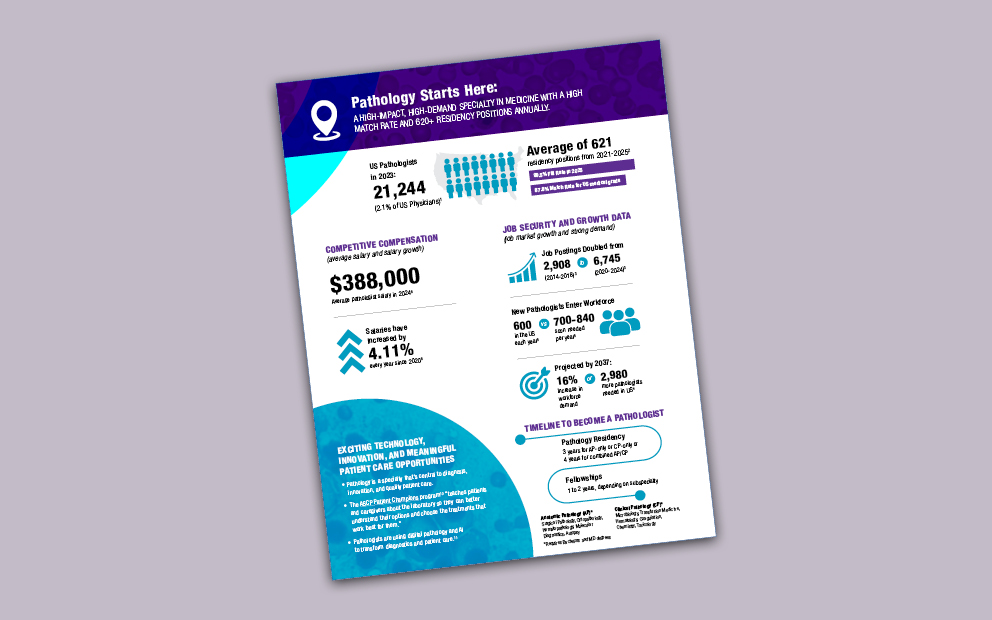
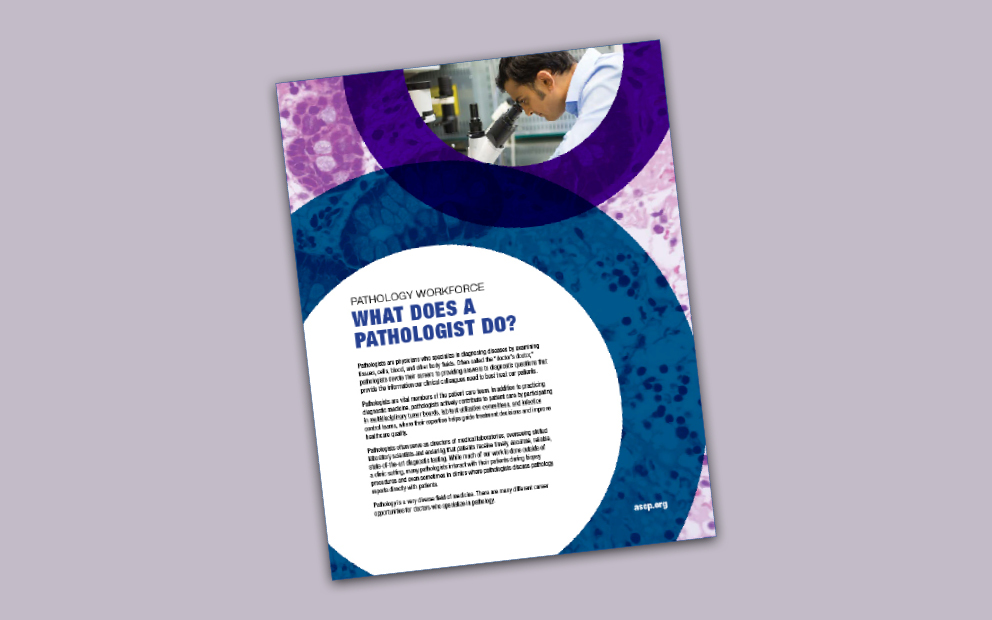

ASCP empowers the pathologists through evidence-based research and strategic partnerships, driving policy change to ensure a resilient, well-supported, and future-ready healthcare system.
The landscape of U.S. pathologists is shaped by a seasoned, steadily growing workforce—professionals who are largely mid career or older, trained both domestically and abroad, and distributed unevenly across the country. As a specialty that represents a relatively small fraction of all U.S. physicians, pathologists reveal their identity through their demographic contrasts, geographic patterns, and evolving compensation trends, painting a vivid picture of who they are and how they fit into the broader medical community.
Pathologists face a growing supply–demand gap driven by an aging workforce, rising clinical needs, and a training pipeline that cannot keep pace, all while job postings continue to surge nationwide. At the same time, pathologists experience high rates of burnout and persistent public misconceptions about their role, underscoring the specialty’s urgent need for greater visibility, support, and workforce planning.
Pathology is rapidly evolving through digital transformation, with advances in whole slide imaging, AI driven diagnostics, and emerging technologies that expand accuracy, efficiency, and global collaboration. As these tools reshape workflows, pathologists remain essential stewards of diagnostic excellence, navigating technical, regulatory, and ethical challenges while working to improve worldwide access to high quality diagnostic care.
ASCP works diligently to support regulations that maximize pathology and laboratory medicine's role in improving patient health. Here are just a few examples of recent ASCP-led advocacy efforts focused on supporting and elevating the pathologist workforce.
ASCP works collaboratively with a wide network of organizations to strengthen the pathology and laboratory medicine workforce and expand awareness of careers options. Through these partnerships, ASCP advances educational initiatives, workforce development, and public engagement efforts that support and elevate pathologists and lab professionals across medical and public health settings.
In 2023, ASCP established the Medical and Public Health Laboratory Workforce Coalition, uniting 28 organizations to raise awareness of laboratory testing professions and inspire individuals to pursue careers in laboratory medicine. Discover more resources and ways to get involved.
ASCP partnered with George Mason University and the National Center on Forensics to develop forensic pathology sessions and webinars, designing the content and recruiting subject matter experts.
The following sessions are available to watch for free.

The Pathologist Council and Resident Council together serve as key voices for ASCP’s Pathologist and Pathology Resident members, ensuring strong communication between the Society and these professional groups. Collectively, the councils guide strategies for recruitment and retention, advocate on issues affecting the pathology community, and identify opportunities to enhance member resources, products, and services.
These external dashboards offer physician workforce trends and data, providing context and meaningful comparisons between the pathology workforce and the broader physician workforce.